Kundalini Meditation
A sister method to Dynamic Meditation. The point is not to manufacture shaking, but to allow it to happen so the body can move from rigidity into flow.
For your first session, watch the video to understand the movements and stages. For the actual meditation, play the practice audio, put the phone aside, and follow the full process. Download the audio first if you want to practice offline.
Practice style
Read in order: first understand the instruction for this stage, then look at the matching movement image. During the actual meditation, you can play the practice audio below.
Shake (15 minutes)
Stand relaxed and let shaking begin from the feet and spread through the whole body.

Dance (15 minutes)
Dance in whatever way the body wants.

Witness (15 minutes)
Sit or stand with eyes closed and witness whatever is happening inside and outside.
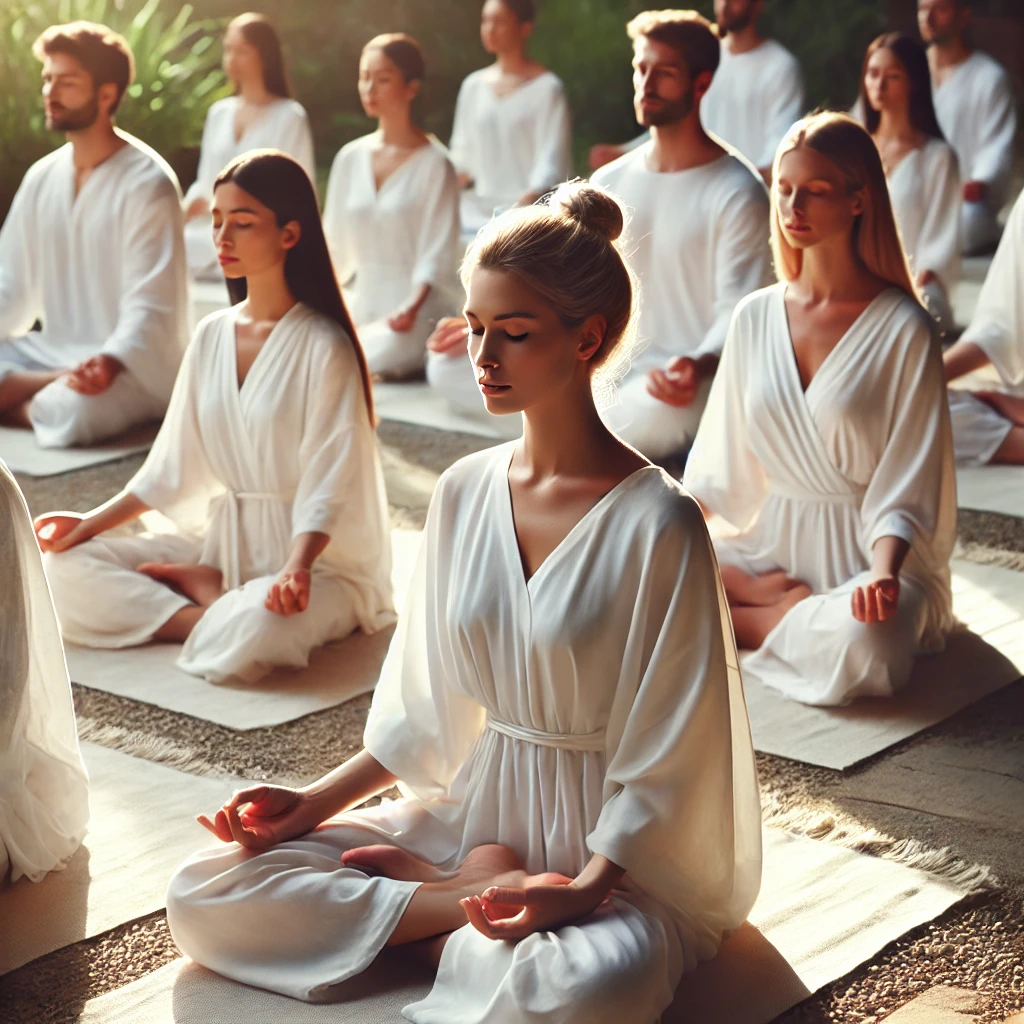
Stillness and rest (15 minutes)
Lie down quietly with eyes closed.

The method is only an entrance. Whether it uses breath, dance, sound, darkness, sitting, or relationship, what matters most is gradually seeing what is happening rather than only chasing an experience.
Put comfort and safety first. Stop if you experience significant dizziness, pain, difficulty breathing, or loss of balance. Intense breathing, whirling, or breath-retention practices are not suitable for everyone.
Begin Meditation · Practice Audio
Use this audio for the actual meditation. You can play it here or download it to your phone for offline practice.
First Session · Video Guide
Use the video mainly to understand the movements, stages, and posture. Once you understand them, use the practice audio for the meditation so you do not need to keep looking at the screen.